
Leading a Multi-Year CRO Program for a National Law Firm from baseline UX improvements to measurable business growth
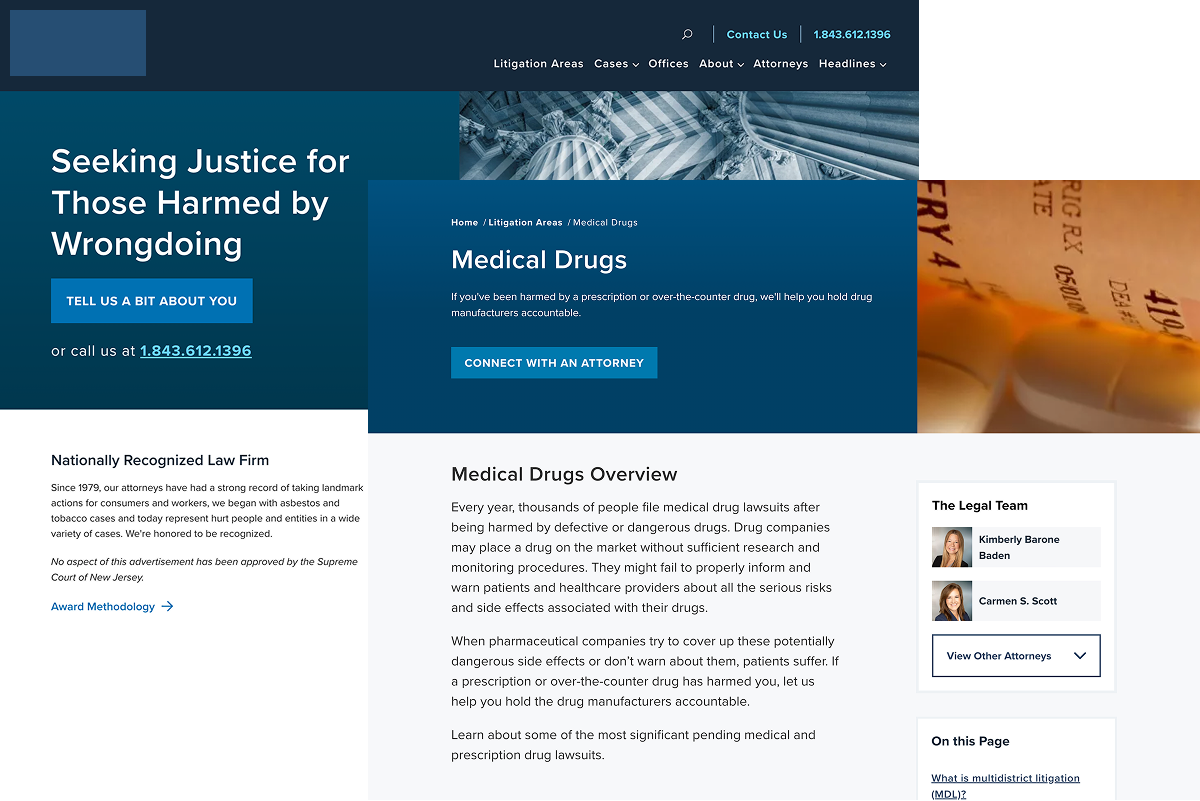
- Client: National Law Firm
- Role: UX Lead & CRO Strategist
- Collaborators: SEO Strategist, Content Strategist, UX Strategist (direct report)
- Timeline: May 2024 — Present
Overview
A national law firm was gaining organic search momentum but struggling to convert that traffic into signed clients. The website’s user experience and conversion pathways hadn’t kept pace with the firm’s growing visibility. I joined the engagement as the Lead UX and CRO Strategist, embedded within a cross-functional team of SEO and content specialists, to close that gap.
This isn’t a single project, it’s an ongoing multi-year program focused on turning organic traffic into qualified leads and signed clients through continuous experimentation, cross-functional collaboration, and sustained prioritization discipline.
My Role
As the Lead UX and CRO Strategist on the account, I operate as a senior individual contributor while also managing a UX Designer who supports execution across the program. Understanding the difference between those two modes, doing the work and directing the work, has been one of the more important professional dynamics this engagement has sharpened for me.
My responsibilities span the full program lifecycle:
- Setting UX and CRO direction and prioritizing what moves the needle now versus what goes on the roadmap
- Leading client-facing presentations and persuading stakeholders to take strategic risks on new ideas
- Managing and providing direction and QA to a UX Designer on the account
- Building and refining the developer handoff process to ensure recommendations are implemented as intended
- Educating the client on CRO as a lever for conversion, shifting their focus from traffic acquisition to revenue per visitor
The Strategy
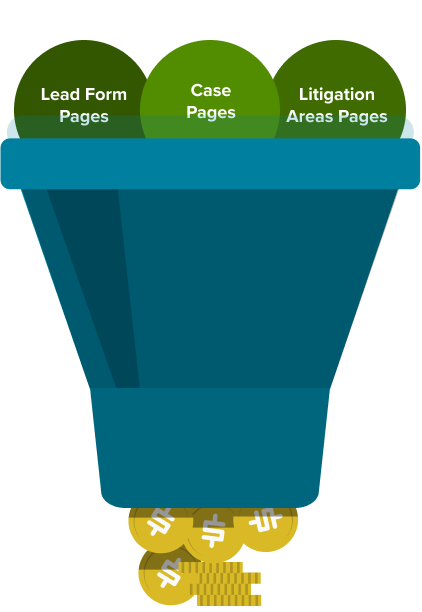
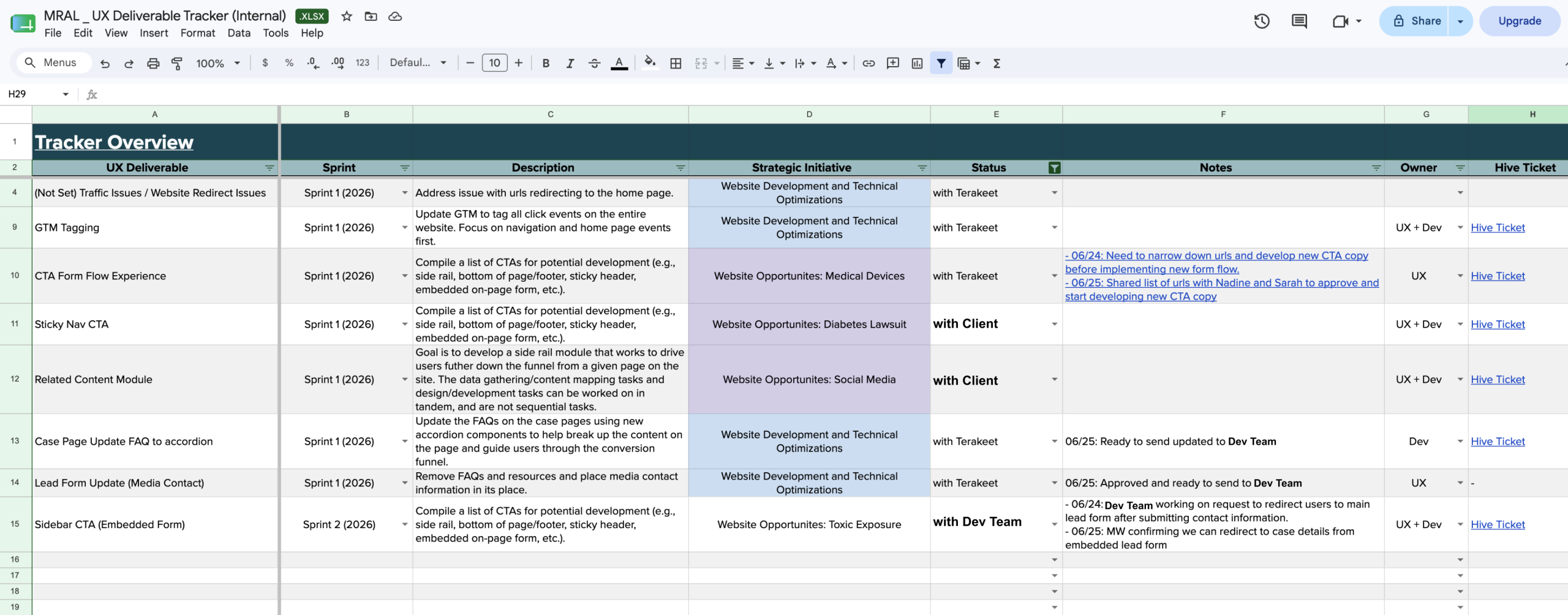
The strategic insight driving every decision: organic traffic is only valuable if the experience converts it. SEO brings users to the door. UX and CRO determine whether they walk through it.
To keep the program focused rather than reactive, I helped establish three integrated workstreams:
- SEO + UX Alignment Every UX recommendation is pressure-tested against SEO impact. Changes that improve conversion without hurting traffic move forward. Changes that create trade-offs get escalated for strategic discussion to prevent the siloed thinking that would otherwise undermine both programs.
- Continuous Experimentation I lead regular brainstorming sessions to surface new conversion opportunities across the user journey. Ideas are evaluated against the firm’s lead-gen goals and scored for implementation effort to keep prioritization honest.
- Content Integration Copy and design are treated as a single conversion system. Bringing content into the design process early ensures new UX patterns are matched with messaging that aligns with user intent and the firm’s brand voice.
Key Projects
Projects that helped improve performance.
Lead Form Optimizations
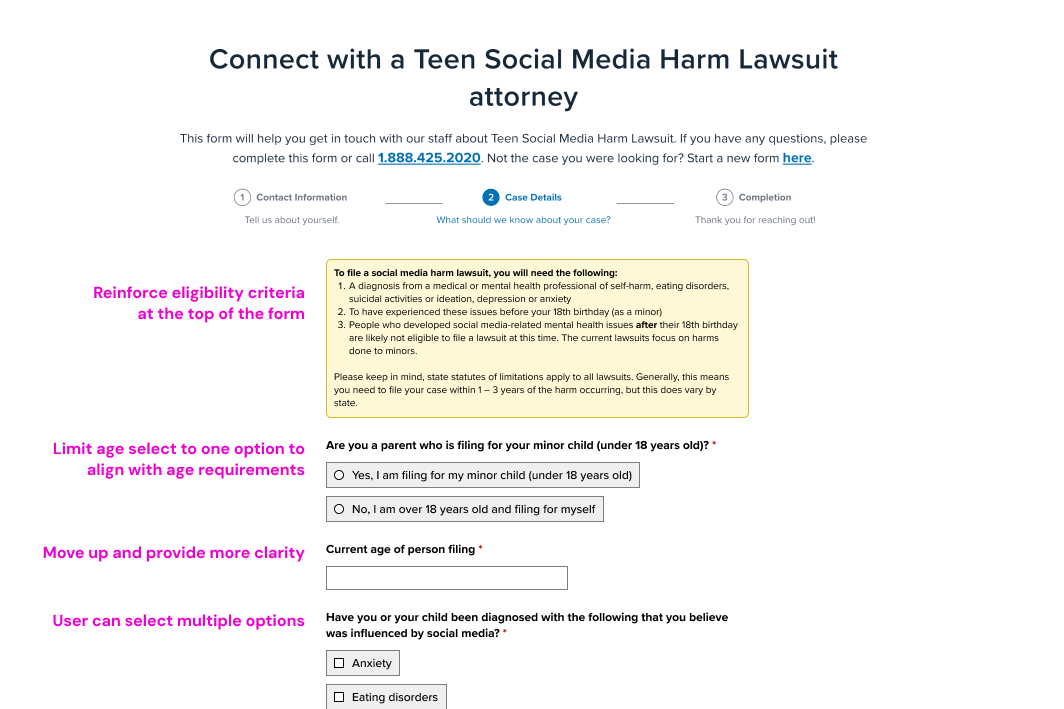
To optimize claimant intake and reduce the burden of unqualified leads across priority litigation pages, I helped the team audit and overhaul the multi-step form experience for a high-volume plaintiff law firm.
By tightening mobile field spacing for the 60%+ of phone visitors, sharpening Step 2 qualifying questions, and embedding legal disclaimers in-line, we eliminated form backtracking and lifted firm-wide completion rates from 68.7% to 72.7%, highlighted by a standout leap on the MiniMed™ form from 31.3% to 54.5%.
This strategic introduction of clear qualifying friction ensured higher-intent form completions, converting a larger ratio of viable claimants while automatically filtering out non-qualifying cases before they hit the intake team’s CRM.
Example intake question recommendations
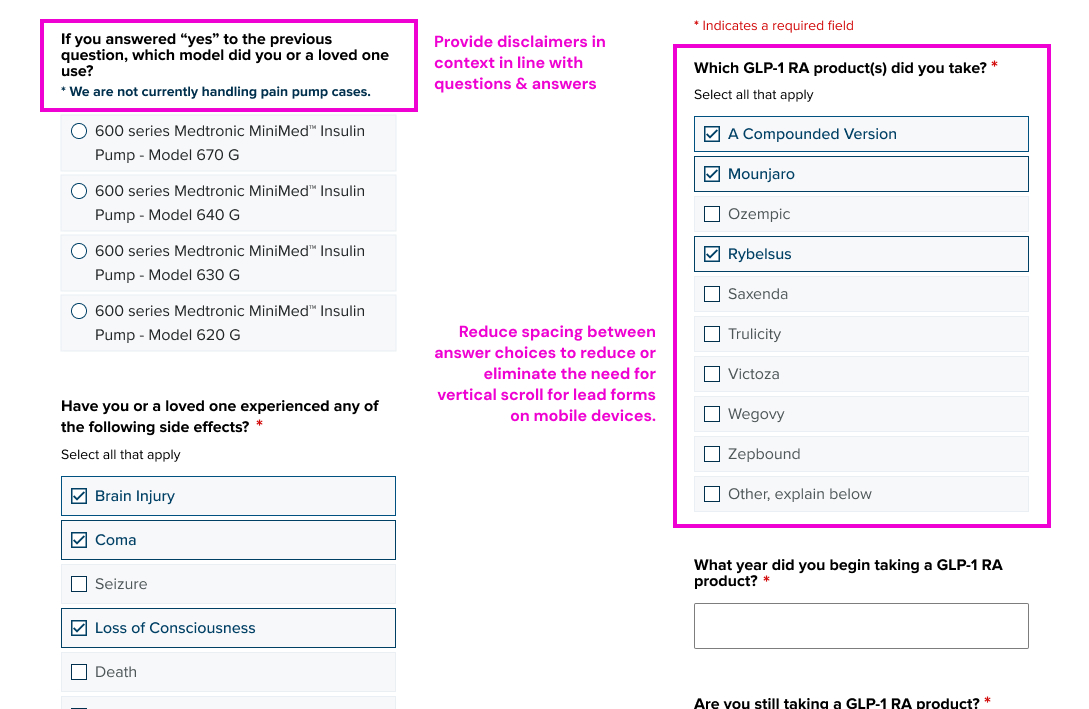
Example UX improvements
Global Navigation Redesign
Our team conducted qualitative user research and determined that users could easily find higher intent pages through adding sub pages to individual cases and practice areas.
To evaluate the main navigation redesign, we analyzed user behavior across GA4 custom events, pathing data, and Hotjar heatmaps. The analysis confirms a major shift in intent: sub-menu click share increased 44.5% overall—led by a 147% surge in direct practice sub-link clicks—while traffic stopping at generic parent hubs dropped 51.4%.
By allowing prospective clients to bypass top-level landing pages and navigate directly to deep, niche case and location pages, the new mega-drawers enforce early self-qualification. This directly reduces low-intent form fills in GA4 while improving the pipeline of qualified, signed cases delivered to the firm’s CRM.
Results
The program was structured in phases. Year one focused on foundational infrastructure, which included authoritative content, technical SEO, and baseline UX improvements. Subsequent years amplified that foundation into measurable business growth.
These results reflect the combined impact of UX/CRO, SEO, and content working as an integrated program. My primary contribution was reducing friction across lead pathways, improving key page experiences, and maintaining cross-functional alignment throughout.
| Metric | Result |
| Webform Prospects | +350% YoY → 2,469 total |
| Qualified Leads | +192% YoY → 534 total |
| Signed Clients | +820% YoY → 46 signed clients |
This engagement is ongoing. Results are as of May 2026 and will continue to be updated as the program matures.
What I’d Measure Next
Connecting CRO program impact to revenue in a legal services context is genuinely difficult. Legal cases can take months or years to resolve, which means the downstream value of a signed client isn’t visible until long after the conversion happens. We’ve also faced challenges connecting GA4 data to the client’s CRM system, an integration outside our scope of work.
These constraints have shaped how I think about measurement on long-cycle businesses. Intermediate metrics, such as form completion rates, qualified lead volume, inquiry-to-consultation ratios, become more important when final revenue impact isn’t immediately attributable.
What I Learned
Technical scoping belongs at kickoff. Early in the engagement I didn’t ask enough questions about the state of the CMS. Page template constraints, deprecated features, and accumulated technical debt created unnecessary complexity downstream. I now prefer having a conversation about technical constraints early on during a new engagement with a client.
Work in progress needs an audience before the status call. There were moments early on where team leads didn’t see recommendations until the weekly status meeting. The feedback that surfaced in those meetings would have been more useful and less disruptive if it had come earlier. Sharing earlier is now a default, not an afterthought.
Managing up and managing down are different skills. This engagement has been the clearest example in my career of operating in both directions simultaneously, directing a UX Strategist on execution while advocating for UX priorities with client stakeholders and cross-functional team leads. Knowing when to be a doer and when to be a director has made me a more effective collaborator at every level.